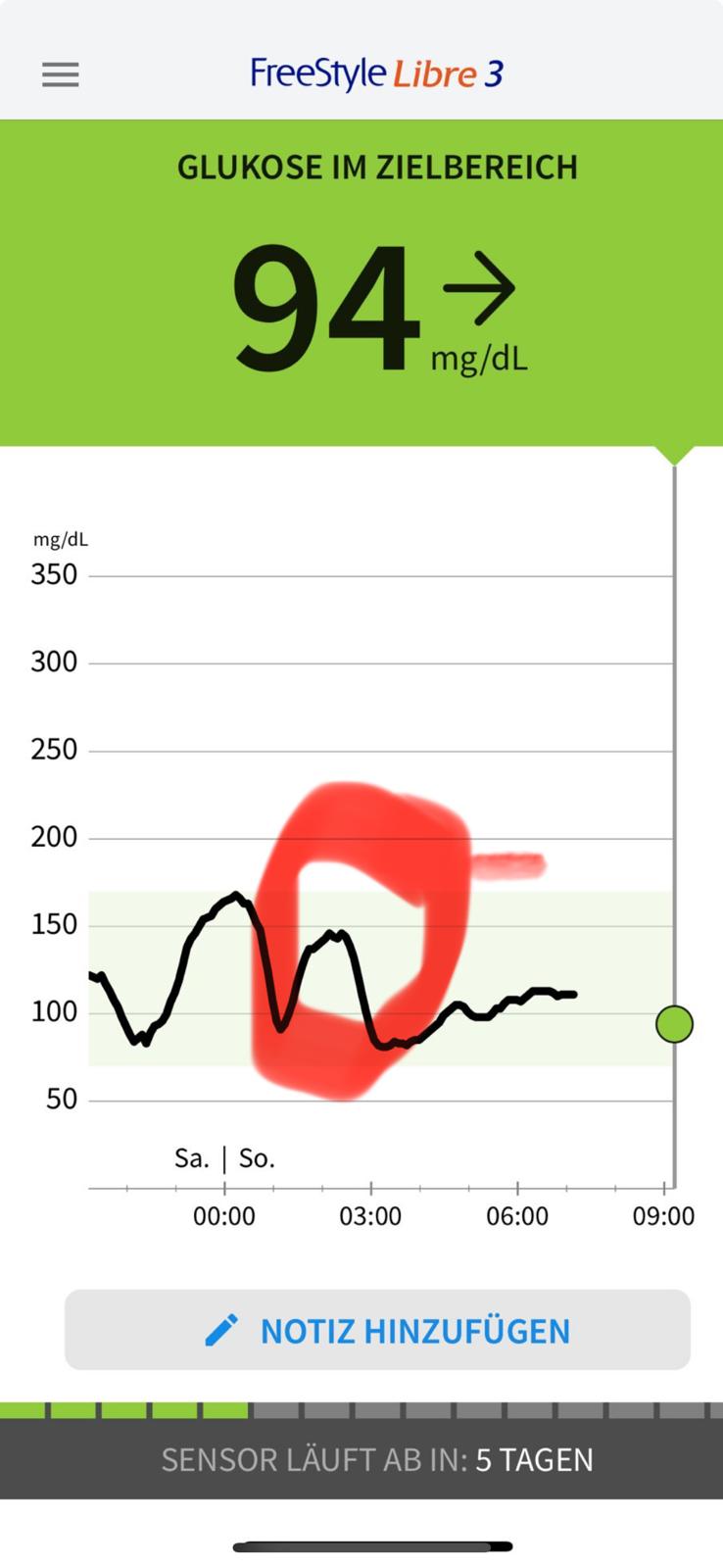
The prediabetes had been there for a while. In autumn 2022 my eyesight shifts during the day, sometimes sharper, sometimes blurrier, and the eye doctor sends me to get my blood sugar checked. From spring 2023 I wear a glucose sensor. During the day my numbers are fine. At night they're not. My sugar rises in my sleep without me eating anything, sometimes twice a night. My sleeping sugar is higher than my waking sugar.
In August 2023 I write to my uncle, a general practitioner:
Could it be that my glucose spikes at night happen because my liver keeps producing bile, even during sleep …?
I'm looking at bile acid. My uncle looks with me. A friend, a diabetic himself, also finds the curves odd. None of us thinks of my breathing. Nine months later the sleep lab shows it: I have sleep apnea, mostly when lying on my back.
What can be behind it
With obstructive sleep apnea, the airway collapses again and again during sleep. Oxygen drops, the body raises the alarm and briefly wakes itself up, usually without you noticing. In the process it releases stress hormones, adrenaline and cortisol. These release sugar from the liver. If this happens many times a night, you can see it on the sensor.
Studies show that sleep apnea and type 2 diabetes often occur together, and that disrupted sleep worsens insulin sensitivity. How strongly apnea drives blood sugar varies from person to person.
Dawn phenomenon or apnea?
The dawn phenomenon is a well-known, steady rise in the early morning hours, caused by hormones that prepare the body to wake up. It comes every morning, at roughly the same time.
Mine looked different:
- spikes in the middle of the night, not only towards morning
- sometimes two spikes in one night
- normal during the day, clearly higher at night
- restless sleep, night sweats, racing heart, headaches in the morning
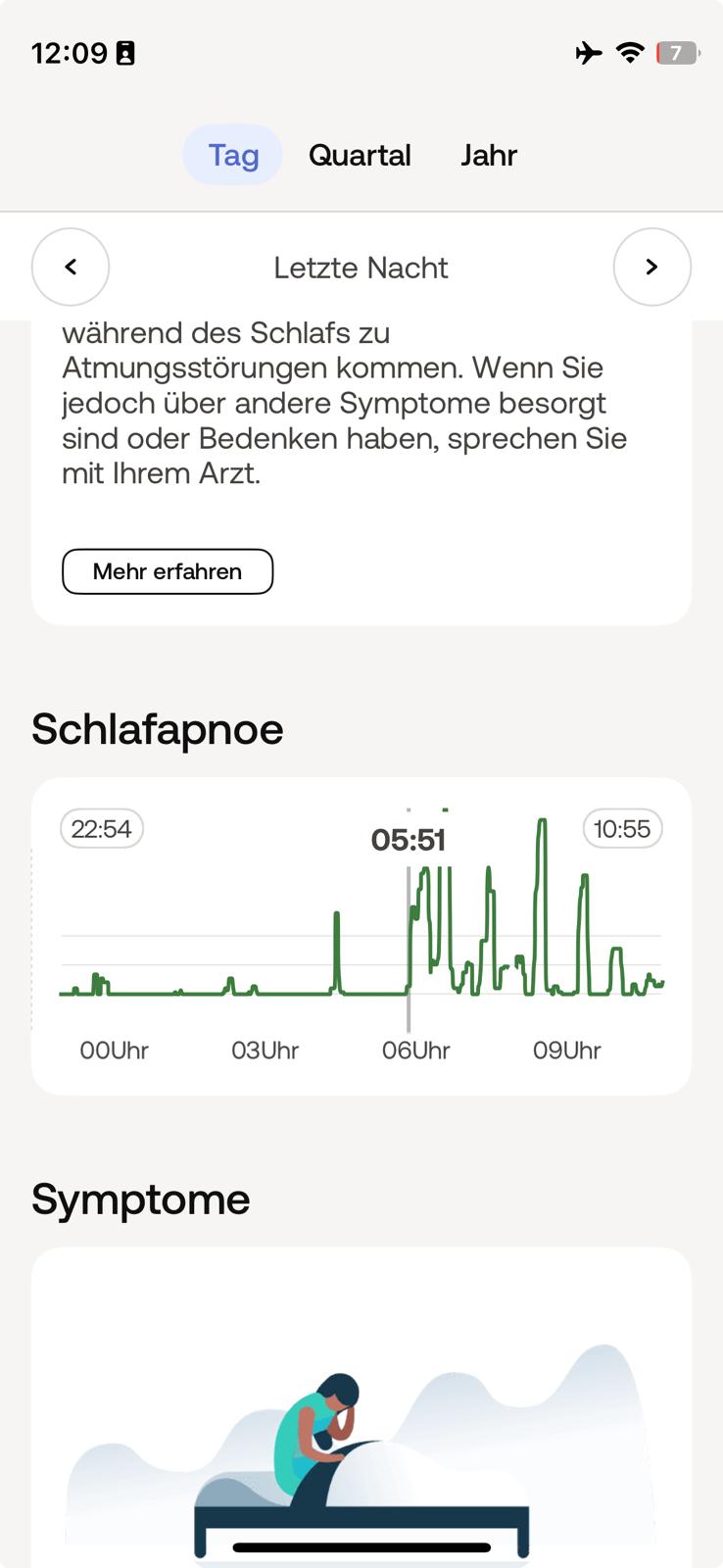
In May 2025, already with an oral appliance, the spikes came back. This time a sleep app was running. Breathing pauses and the rise in glucose matched in time. My uncle simply wrote: "The timing correlates quite precisely."
What I would do differently today
- Don't just write off nighttime spikes without food as "dawn". Note when they happen and how you slept.
- Put your glucose curve and your sleep side by side: sleep app, smartwatch, ask your partner (snoring, pauses in breathing?).
- Ask your doctor explicitly for a sleep study and bring the curves.
- Make sure the test also captures time sleeping on your back.
I'm not a doctor. This is my experience, not medical advice. If your blood sugar behaves oddly at night, have it checked by a doctor. Read the whole story
More topics
- Apnea only on my backMy first sleep test was normal. I had just barely slept on my back.
- Where I am a memberTwo associations I belong to. Through them you can find help – and me.